Showing posts with label water. Show all posts

Monday, August 11, 2014

Implications Done Right

Clean water source. Hygiene. Ebola containment.  These public health priorities and crises often seem like issues that only matter for developing countries.  Indeed, the CDC and other authorities have issued ample assurances that given the quality of our healthcare system and our very different cultural practices, the risk of an ebola outbreak in the US is very low.  That doesn't mean that we've learned our lessons.

As Aaron E. Carroll of the New York Times points out in an excellent article, Guinea worms (and ebola) aside, we are still battling issues of clean water, hygiene, and quarantine in the US.  And we pay for not learning such lessons with illnesses, deaths, and high costs.  As he writes:

The Centers for Disease Control and Prevention estimates that 48 million Americans become ill from food-borne illnesses each year. More than 125,000 hospitalizations are caused by food-borne illness, and about 3,000 deaths. Many, if not most, of these illnesses could be prevented if people properly stored, cleaned, cooked and refrigerated their food correctly. 
Between 1976 and 2007, deaths from influenza ranged from 3,000 to 49,000 a year. The vast majority of deaths from influenza occur in people who are 65 years of age or older. Proper hygiene and staying home during the infectious stage of the illness are still mainstays of flu care. But we also have a vaccine for this illness. Too few people get it. It’s estimated that two years ago, if we had just gotten the influenza vaccination rate up to 70 percent, up from the 45 percent we achieved, we could have prevented an additional 4.4 million illnesses and 30,000 hospitalizations.

Carroll connects global health crises with your health and deftly demonstrates the importance of persuasive communication as well as practicing what we preach.  We know what the answers are and we need to be compelled into putting them into practice.  Lives and dollars are at stake.

Tuesday, November 20, 2012

Structurally Sound


Moving to America was very hard for 9-year-old-me to imagine.  I thought it meant mashed potatoes for dinner every night.  Having always lived in apartment buildings, I couldn’t conceptualize houses with sloped roofs.  But when we actually landed, my poorly preconceived notions of the country faded away, replaced by thrilling new realities.  I remember staying in an airport hotel our first night in the States.  We were brushing our teeth and Mama told us that we could drink the water.  From the tap.  I marveled at the idea with my brother.  Drinking water straight from the tap.  (But just the cold, not the hot.)

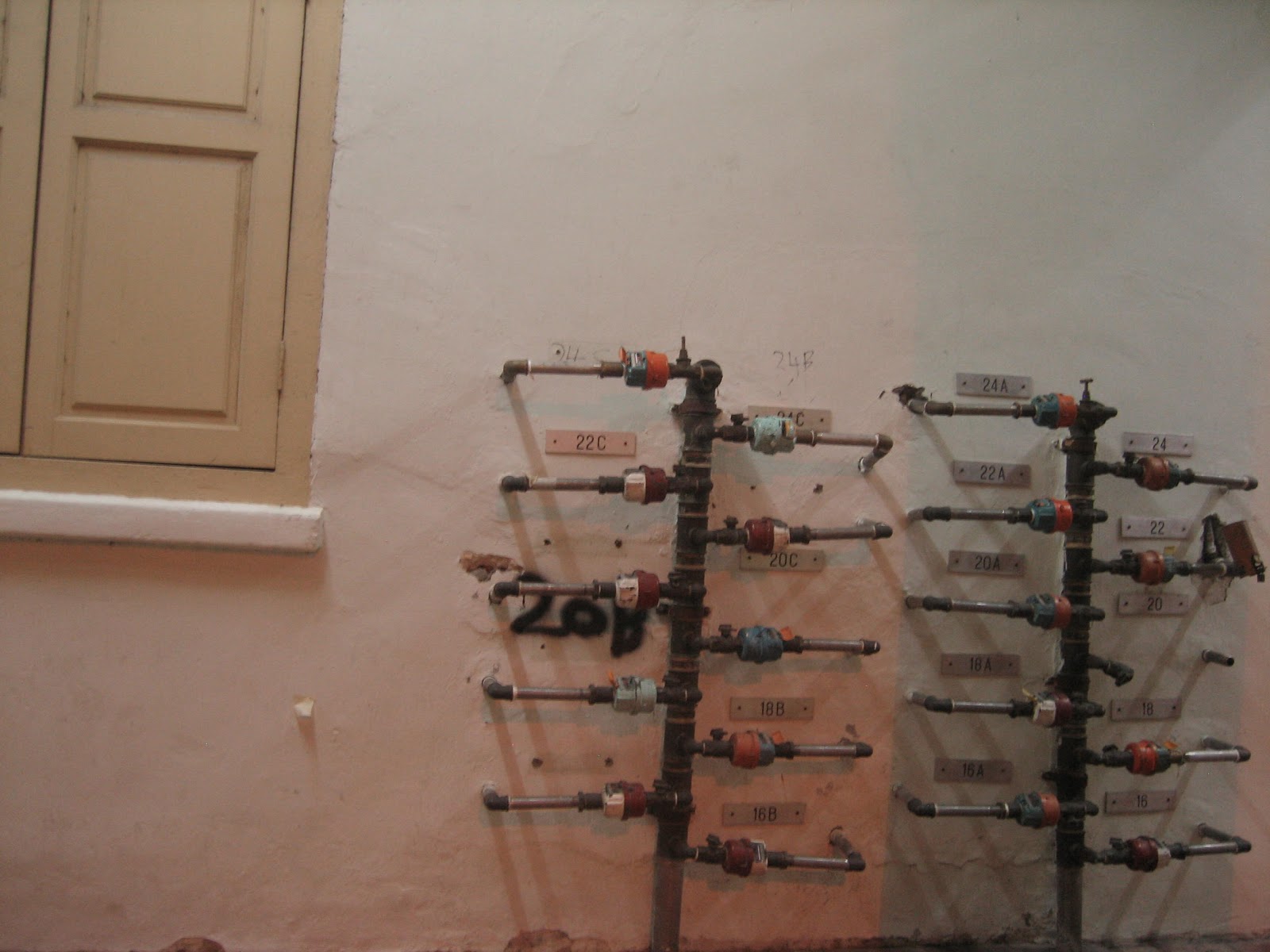
Much to Travel Buddy Dwight’s bemusement and my own amusement, I took a lot of pictures like this when we were in Malaysia two summers ago.  I’m a sucker for infrastructure, for the visible manifestation of countless unobserved decisions.  Why, for example, are these hydrants so scrawny?  And who knew that CS could stand for so many things?  Those who’ve traveled with me would perhaps suggest that I fixate on these questions rather than more important ones at hand, like, “Do you speak English?"  "Should this alley be this deserted?"  "And why did the driver just kick us off the bus when we’re still 3 hours from our destination?”  I have a different explanation.


Economists like to speak of the invisible hand of the market.  I like to capture the works of the invisible hands of civil servants because they remind me of all that public health achieved while we were sleeping.  During this Smallpox Survival Season, I am thankful for all the answers public health has provided, like what number to call when my water heater goes up in flames.  And for answers to questions I hadn’t even thought to ask, like how hot should my tap water get?  I am thankful for all the taken-for-granted decisions I didn’t have to make, like having vaccinations for diseases whose symptoms I don’t ever need to learn.    

There are countless more public health problems we still don’t have solutions for, countless crises still overlooked by even the invisible hands.  Why, for example, are there enough many opiod pain relievers made to medicate every American 5mg of Vicodin every 4 hours for a month, yet hospitals have to ration their morphine supply?  Why are civilians allowed to possess assault weapons?  Why won’t providers see patients on public insurance?  For all these questions, I’m thankful that there will be jobs in public health policy for the foreseeable future.

What are you thankful for?

PS. The more I think about and edit this post, the more I realize I have to be thankful for: Nancy Turnbull, water fluoridation, and the brilliant Aussie minds behind Dumb Ways to Die.